
Client
OCAD University, Directed Studio II Exhibition ([Lab]rynth)
[Lab]rynth (March 2026) was a group exhibition featuring the OCAD University IAMD graduate cohort. Staged in the university's Great Hall, the show explored the non-linear path of creative research.
Roles
Solo Product Designer & Mixed Media Artist
Duration — Jan 2026 – May 2026
Overview & Initial Research
I’ve been exploring ways to use fine art practices to deepen empathy and creativity in design. For this particular project, I focused on interface design and asked the question, “How can we rewild digital interfaces by using mixed media art?”
The problem: Today’s user interfaces can tend to be structurally rigid, soulless, and plagued by "AI slop" that strips away human touch.
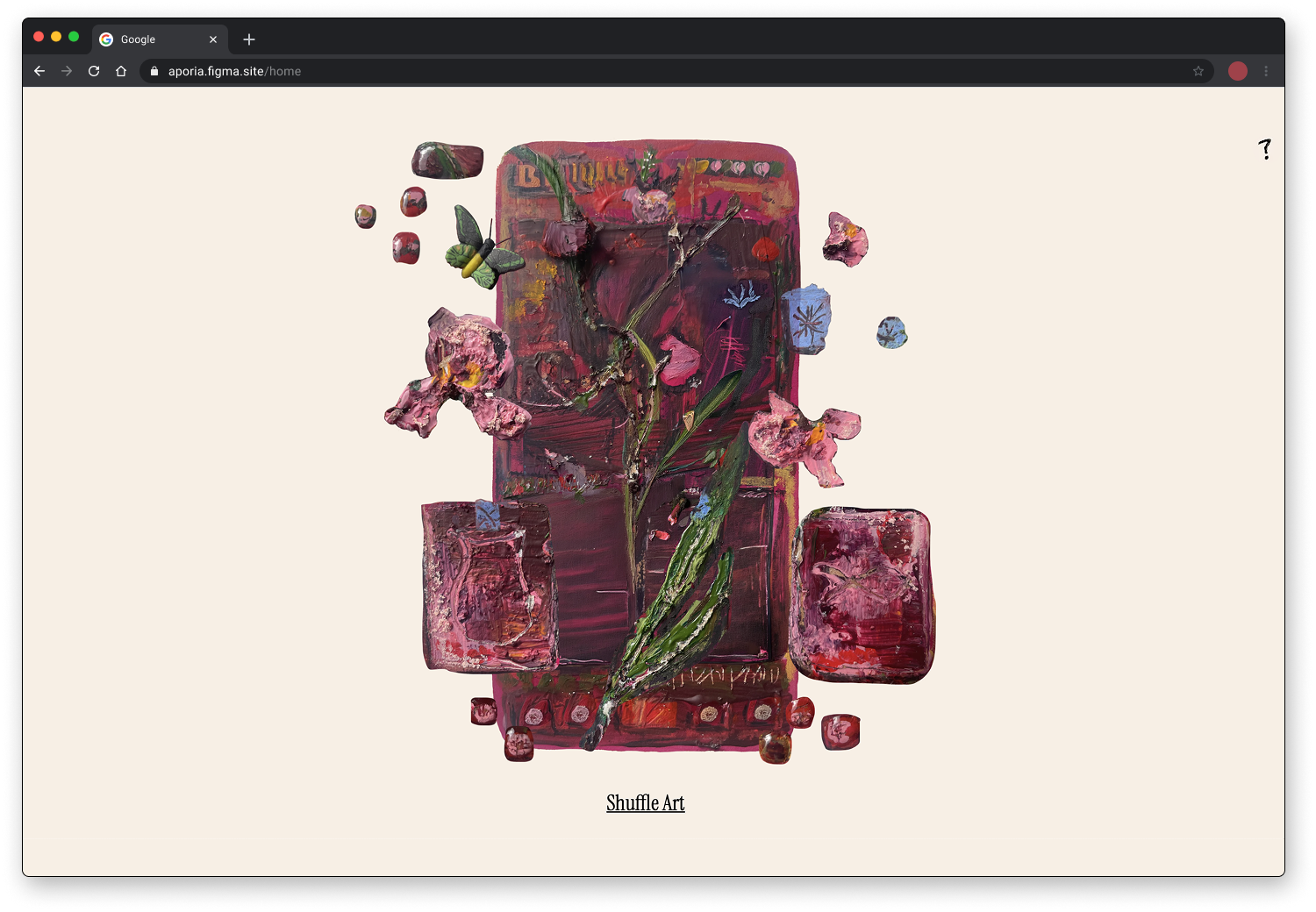
The goal: An experimental web application built by translating physical, analog mixed-media artwork into interactive UI components, proving that digital interfaces can foster emotional resonance, open-ended discovery, and user agency.
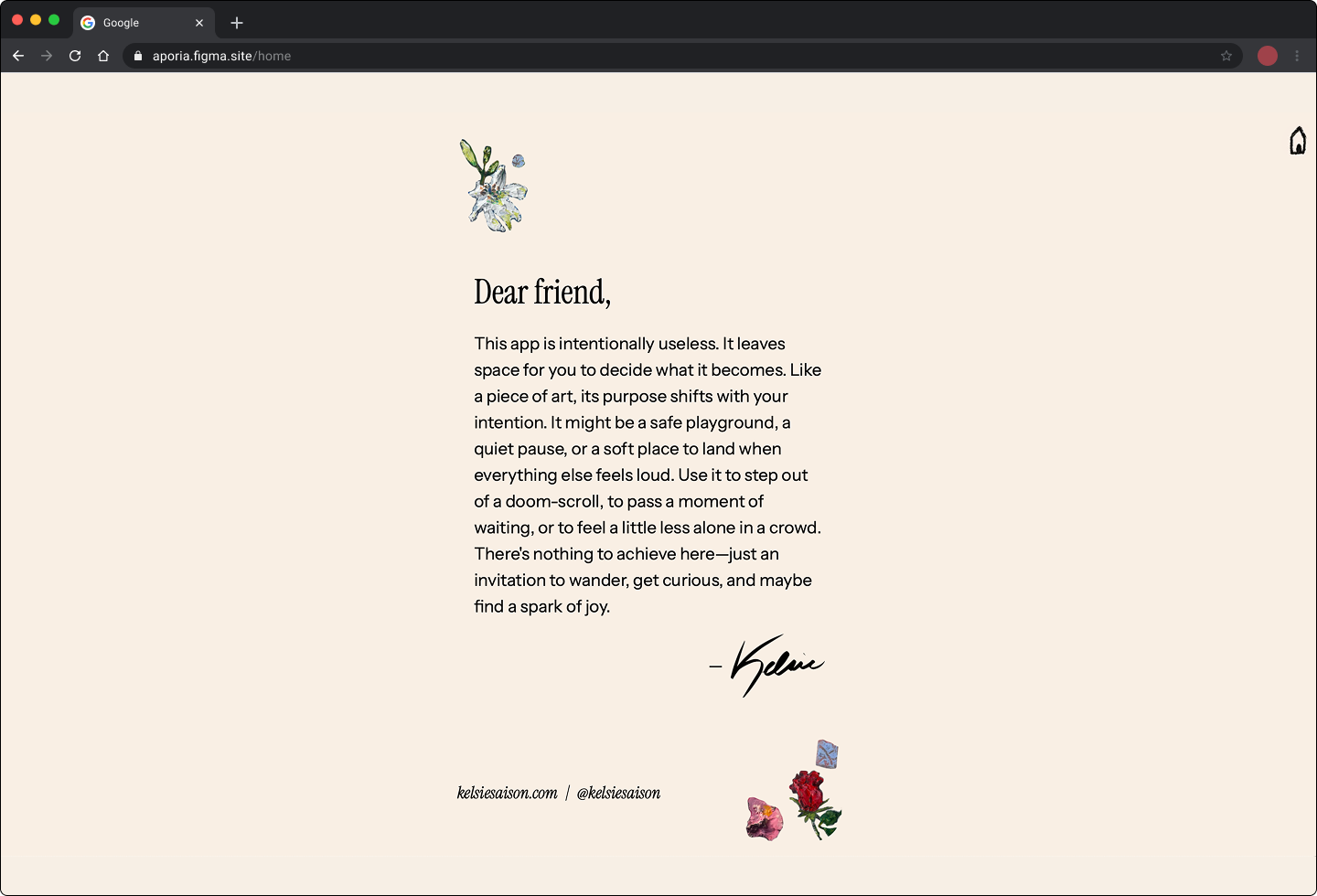
In my research, I opted for rapid, non-finito prototyping, intentionally leaving the potential uses of this app up for interpretation, much like how a viewer interacts with an art piece. I was heavily inspired by Bruno Munari’s process in his Useless Machines projects and how his open-ended research and rejection of utility led to serendipitous discoveries.
Art as a foundation for visual design research
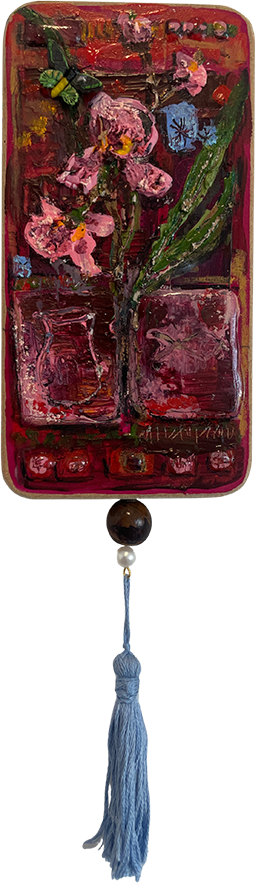
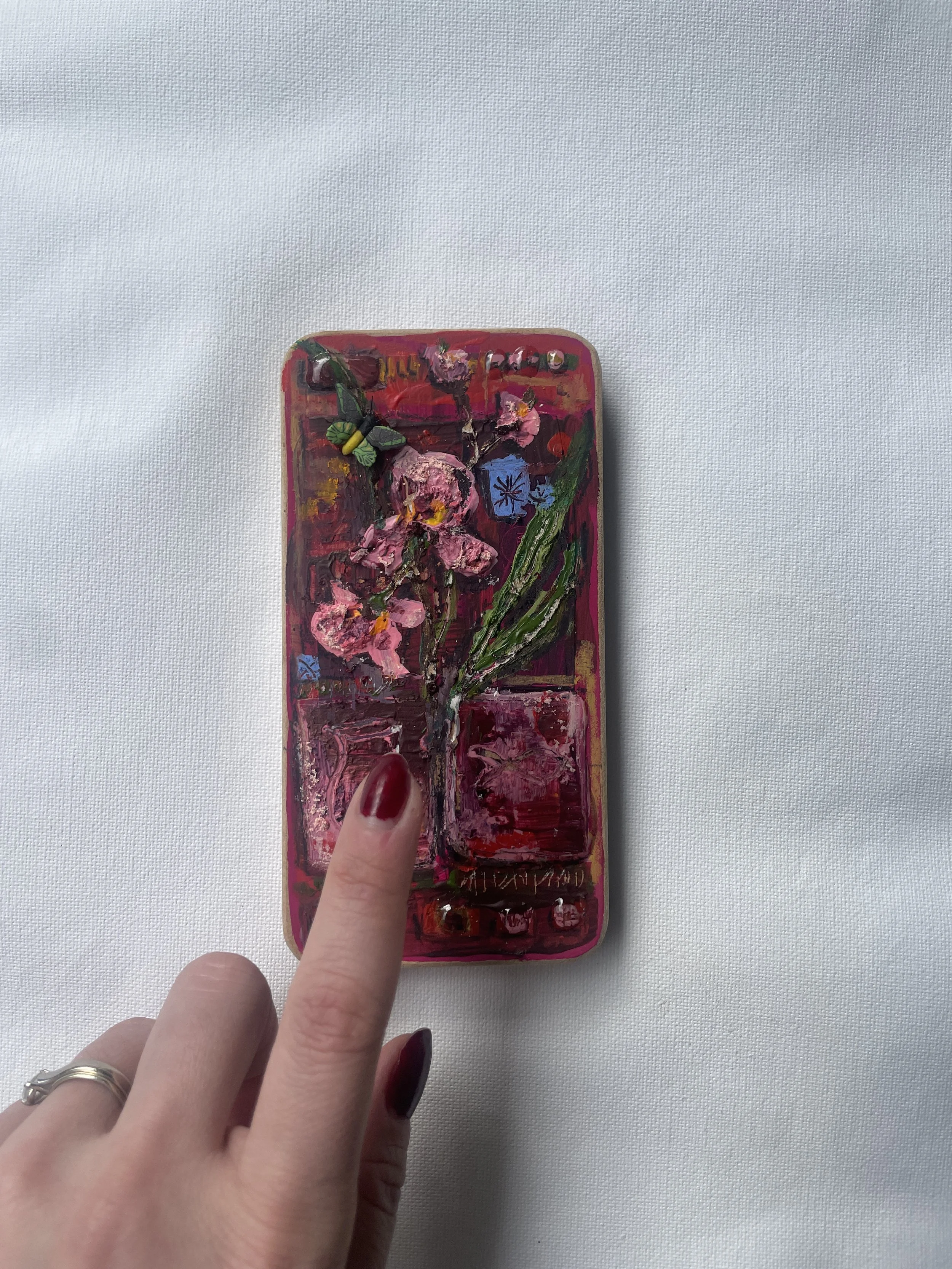
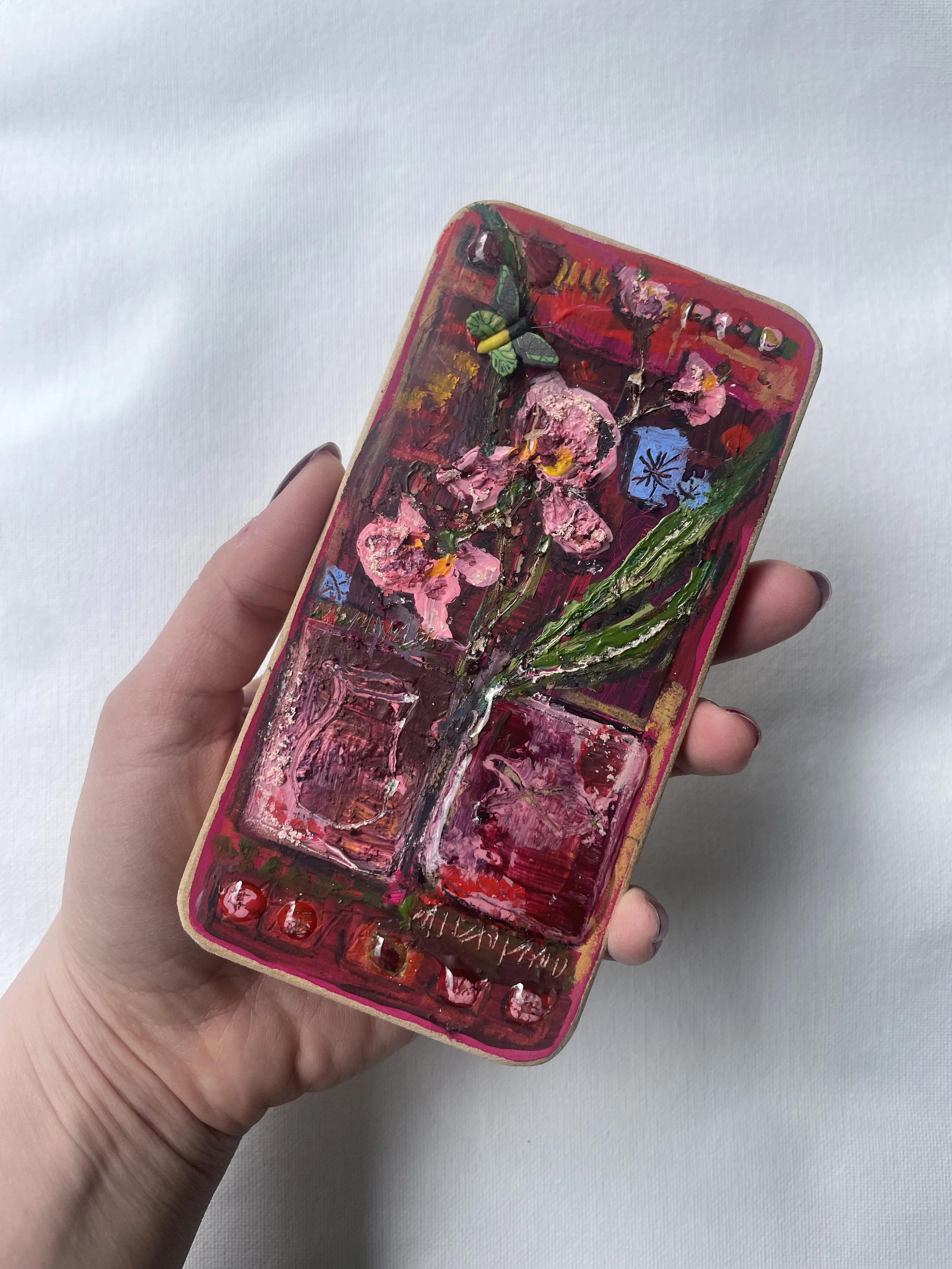
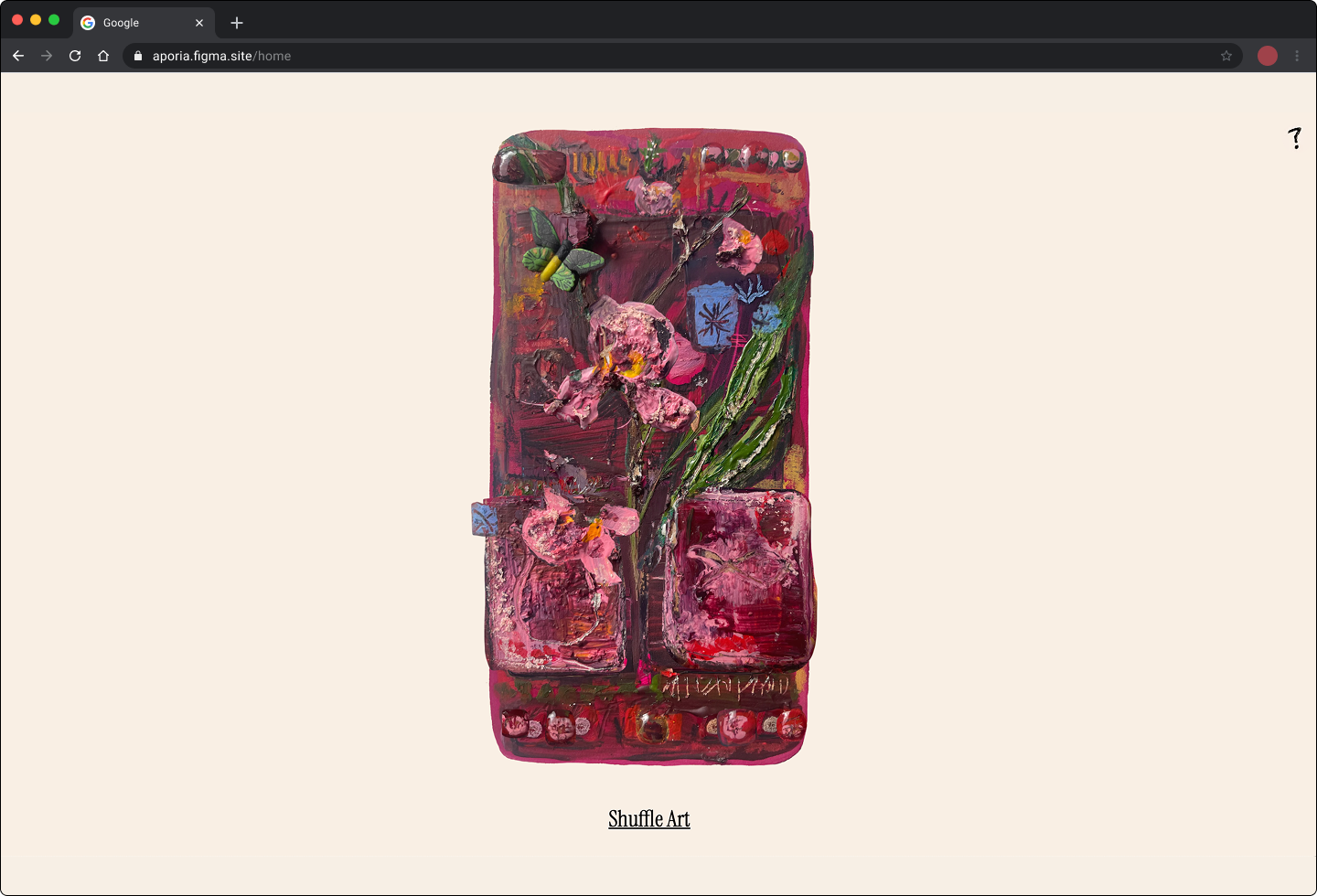
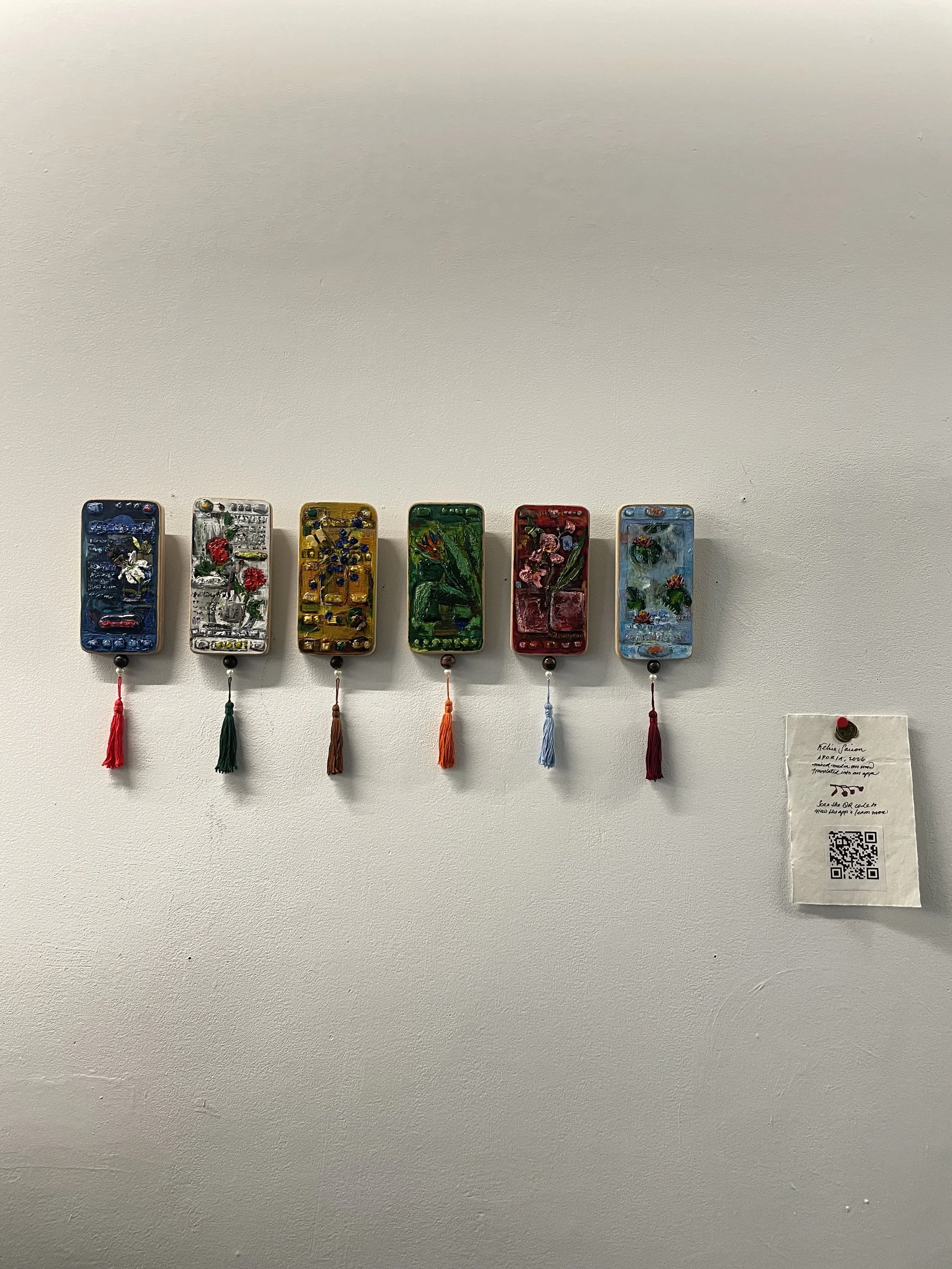
In order to bring a heightened level of tactility to the final interface, I knew I needed to lean into vibrant colour and texture. I cut and sanded several phone-shaped wood blocks to be my canvases. Then applied several layers of thick impasto, collage, resin, and used sgraffito techniques to craft a somewhat abstract rendering of botanicals and UI components as symbols of a collaboration between the natural and digital world. My artwork was highly influenced by Robert Plutchick’s Wheel of Emotions and I painted each work with a specific emotion in mind.
See more on each artwork in my art portfolio.
Translating artwork into a digital product
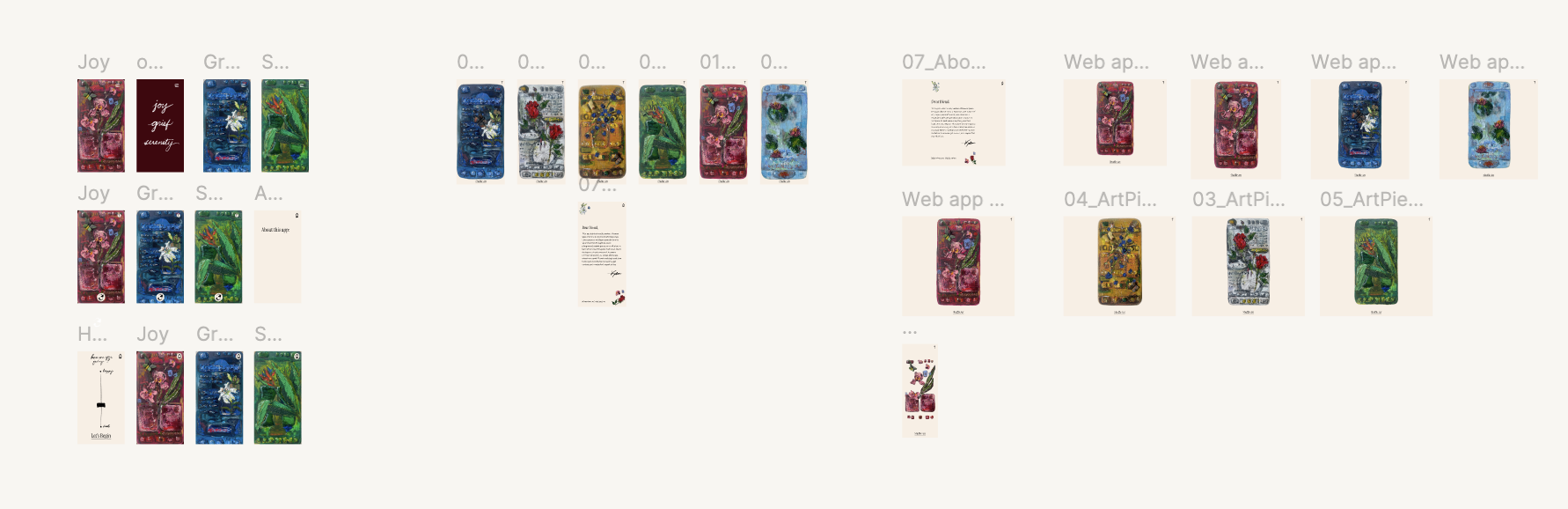
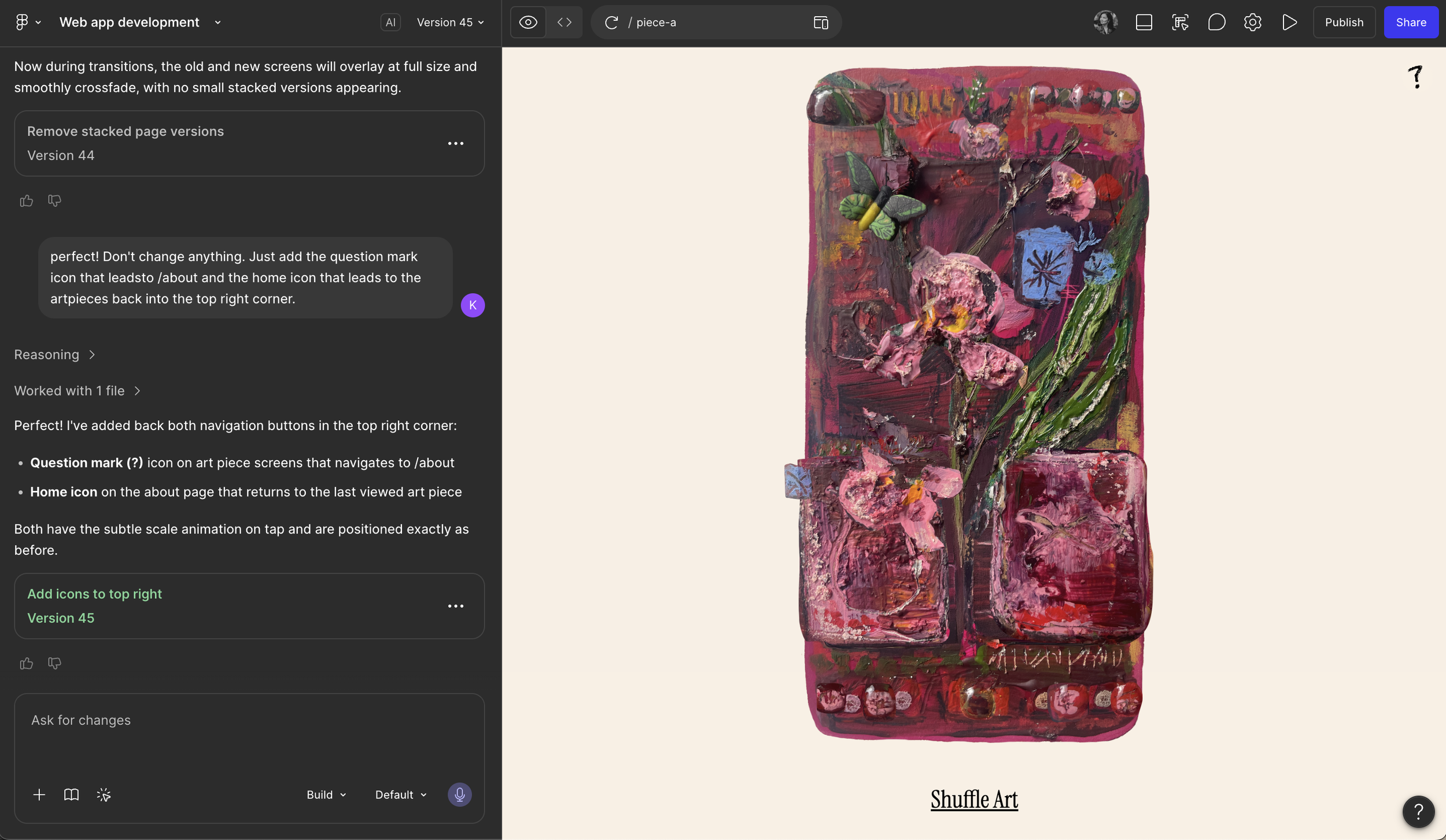
To bridge my physical and digital practices, I deconstructed the paintings. I isolated specific textures, brushstrokes, and shapes, treating them as atomic design assets. These elements were then imported into Figma to build custom, fluid UI components that maintained their human, painterly origins. I collaborated with Figma Make to develop the live web app.
View the live web app here.
The exhibition & user feedback
Aporia was shown at the [Lab]rynth Exhibition. The physical paintings were hung at eye level next to a handmade didactic containing a scannable QR code linking to the live Figma application prototype.
Presenting a digital app within a fine art context posed unique challenges but unlocked several insights, including hidden utility in the art therapy and wellness spaces. This approach to interface design was well received by users and opened up new interpretations of what a digital product should look like.
Conclusion
Impact: This project unified my dual practices. I proved that fine art vernacular can elevate digital interfaces, and rapid digital prototyping can accelerate fine art workflows. While data-driven design has its place, leaving room for emotional ambiguity allows digital products to feel genuinely alive and human.
What I learned: Utilizing the methodology of "non-finito prototyping" showed me that leaving design outcomes intentionally open-ended invites deeper user interaction and innovation. Ultimately, I discovered that I don’t need to over-engineer every workflow, as digital interfaces can naturally adapt to the organic, expressive vernacular of physical art.
Next steps: Moving forward, I plan to scale this project by capturing quantitative user feedback through live interaction heatmaps and spatial analytics to evaluate changing engagement levels. These insights will serve as the foundational validation for my upcoming thesis work, where I will dive deeper into Arts-Based Research (ABR) applications in the product design ecosystem.